


MANEH Platform: SASO Registration, Certificates and Application Guide
MANEH is the Saudi Standards, Metrology and Quality Organization’s electronic system for certificate-granting services. Manufacturers and importers can use it to access relevant Saudi Quality Mark, conformity certificate and IEC certification services. The right application depends on the product and the certification scheme—not simply on whether the goods will be shipped to Saudi Arabia.
This guide explains how to prepare for MANEH, choose the correct registration route and handle existing Jeem records. It also explains how MANEH fits alongside SABER.
What is MANEH?
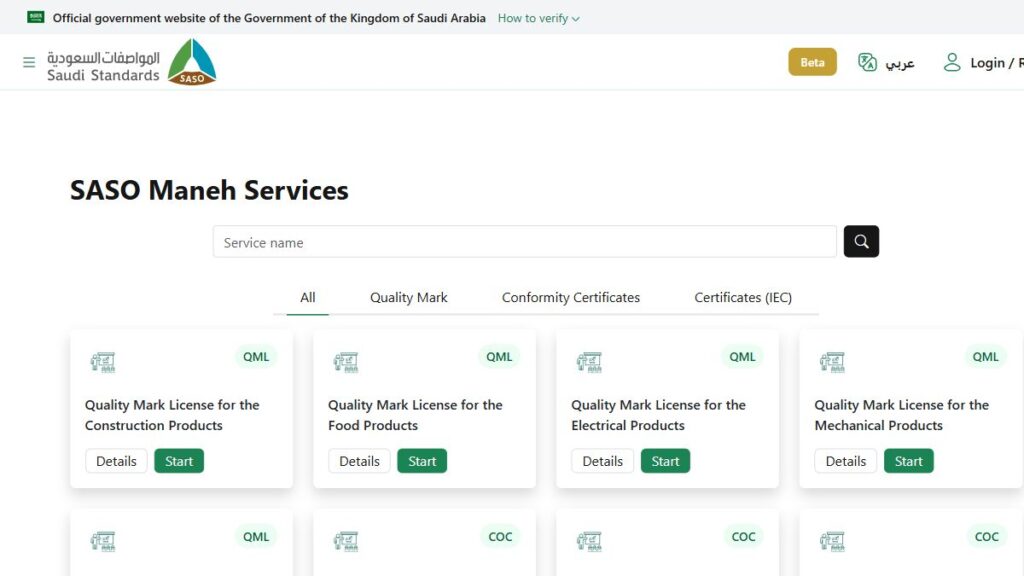
The official MANEH service catalogue groups services under Quality Mark, Conformity Certificates and Certificates (IEC). Examples include Quality Mark licensing for several product sectors, IECEE recognition, selected product-specific conformity certificates and the Environmental Performance Card for paints and varnishes. These are separate services with their own scope and requirements.
MANEH is a platform, not a single certificate or a technical regulation. An account does not itself demonstrate product compliance, and a service listed on the platform is not automatically mandatory for every product.
MANEH and SABER: which platform do you need?
MANEH handles the SASO certificate-granting services available in its catalogue. SABER supports product registration, product conformity documentation and shipment certificates for the applicable import or local-product route.
MANEH does not replace SABER. Depending on the product, a manufacturer or importer may need a scheme-specific certificate through MANEH as well as the relevant SABER procedures. Do not assume that every SABER Product Certificate of Conformity is issued through MANEH, or that a MANEH certificate removes all shipment requirements. Confirm the applicable technical regulation and the certificate route before applying.
How do Saudi and overseas businesses register?
Use the official MANEH login page and its User Manual. The registration route depends on the entity’s location and type.
- Saudi for-profit companies: the official manual specifies a valid Commercial Registration, an authorized representative and sign-in through Nafath. The login page also requires active electronic authorization through the Saudi Business Center for SASO’s Certificate Issuance service. It states that authorization activation may take up to 24 hours.
- Overseas companies: select the overseas business route, currently labelled “Export” in the English interface. New applicants provide company registration details, address information and the primary representative’s contact details, then complete the required verification and review steps.
- Representatives: confirm the appropriate authority to act for the establishment. An informal agreement with a consultant does not replace the platform’s authorization requirements.
Use company-controlled contact details and retain access to the registered email. The current registration manual specifies PDF attachments up to 2 MB for registration; check the individual upload field because technical application files may have different limits.
Already have Jeem certificates? Check your migrated records
Do not create a duplicate overseas-company account without checking the migration instructions. SASO’s current registration manual explains that overseas businesses with previous Jeem certifications have migrated records and should access MANEH using the email registered in Jeem, follow the password-update instructions and review their company information.
The manual also explains how to find migrated certificates, including searching by a Jeem certificate number, and instructs users to review and update certificate details. Keep copies of existing certificates and verify their status, expiry and any required update in MANEH. If the records are missing or the registered email is inaccessible, contact SASO support before making a new account. Do not assume that leaving an old certificate untouched until expiry completes the transition.
What documents should you prepare?
Start with the selected service’s official requirements. As a practical preparation checklist, gather:
- Company registration, establishment and factory details, and any applicable industrial licence.
- Applicant and authorized representative details, including the relevant electronic authorization.
- Product descriptions, model numbers, brand information, photographs, labels and intended use.
- Applicable standards, technical regulations, test reports, declarations and existing certificates.
- Importer information where requested by the selected service.
Additional documents depend on the scheme. For example, SASO’s IECEE Recognition Certificate service requires an accepted CB test report and CB test certificate, together with applicable Saudi national-difference evidence. Other approvals may be required for the product. A Quality Mark application has a different assessment route and can involve manufacturing and quality-control evidence; see our Saudi Quality Mark application guide.
From preparation to a certificate
- Identify the product, applicable regulation and exact certification service.
- Confirm the applicant, establishment and any importer or manufacturer relationships required for that service.
- Complete account access, authorization and any migration updates.
- Enter consistent establishment, factory and product data and upload the requested evidence.
- Submit the application and pay the applicable official invoice.
- Monitor the account, answer technical comments and complete any scheme-specific testing or assessment.
- After approval, check the issued certificate’s holder, models, scope and validity, then complete any applicable SABER steps.
Fees, timing and common mistakes
There is no single fee or completion time covering every MANEH service. Review the current official service fees and any separate testing or assessment charges before committing to a shipment date. Do not assume that registering as a manufacturer always gives the same certificate wording, importer-linking fee or process: these must be confirmed for the selected scheme.
Common avoidable problems include duplicate accounts, inactive authorization, inconsistent legal names or model numbers, incomplete test coverage and choosing a service based only on a familiar certificate abbreviation. Registration approval and payment are not the same as certification approval.
Need help preparing your application?
SABERSAUDI can help you review your product information and identify the documents needed for the relevant conformity route. Contact our team with your product description, models, manufacturer details and available test reports. Certificate decisions remain with SASO or the responsible authorized body.
Official sources
- MANEH service catalogue.
- MANEH registration page and User Manual — registration manual Version 1.0, 2026.
- SASO IECEE Recognition Certificate requirements.
- SABER platform and service information.
Information checked on 1 November 2026. Always use the current official service requirements for your product and application.