

Saudi Quality Mark: Requirements, Application Process and Responsibilities
For manufacturers and suppliers entering the Saudi market, product compliance starts with understanding which approvals their products need. One important approval is the Saudi Quality Mark (SQM).
This guide explains what the mark means, how to prepare an application, and what businesses must do after receiving their licence.
What is the Saudi Quality Mark?
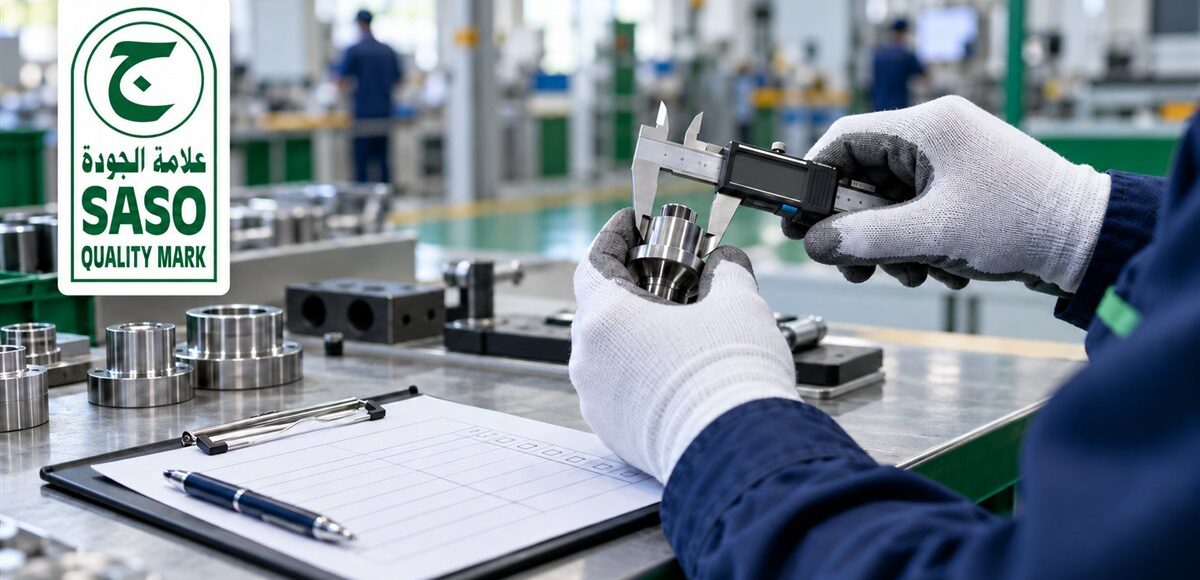
The Saudi Quality Mark is a SASO-owned mark associated with product conformity and an effective management system that supports consistent production. The scheme helps protect consumers, strengthen confidence in products, and improve the competitiveness of local and imported goods. Obtaining the mark involves meeting the applicable requirements for the product category.
Is the Quality Mark mandatory for every product?
Mandatory requirements depend on the product and its applicable technical regulation. SASO’s published list includes categories such as:
- Gas appliances and accessories.
- Reinforcing steel and steel flat products.
- Cement and ready-mixed concrete.
- Ceramic tiles.
- Aluminium composite cladding panels.
- Certain plastic-degradation additives.
- Electrical connections and plugs.
These category names are a starting point. Before applying, check your product’s exact characteristics against the relevant regulation, its scope and any exclusions. See SASO’s mandatory-product list.
Start with the correct product-specific requirements
The general regulation provides the licensing framework. The relevant granting procedure supplies detailed requirements for the particular product. For example, SASO’s cable procedure addresses quality management, manufacturing equipment, product controls, laboratories and technical testing requirements. Its requirements should not automatically be applied to another product category.
Your first preparation step should therefore be to identify the correct procedure and current standards for your products.
What documents should applicants prepare?
SASO’s published application requirements provide a useful preparation checklist:
- Business: commercial registration and industrial licence.
- Factory: factory location and organisational structure.
- Quality management: quality manual or management-system documentation and quality-control plan.
- Product identification: product descriptions, photographs and relevant technical information.
- Testing: internal self-monitoring results and an external laboratory report accredited to ISO/IEC 17025 for the relevant scope.
- Brand and identification: trademark ownership documentation and GS1 barcode documentation.
- Supplier or exporter applications: approval from a manufacturer already holding a Quality Mark licence, where applicable.
The exact file must match the selected product procedure and application route. Review SASO’s published service requirements.
To make the file easier to assess, prepare a clear product schedule connecting each model to its brand, factory, specifications and supporting test report. Check that names and model references remain consistent across the documents.
Is ISO 9001 certification required?
SASO’s published service checklist identifies ISO 9001 certification as optional. Applicants should distinguish between holding that certificate and demonstrating an effective management system. Prepare evidence showing how the factory controls quality in practice, then check the applicable granting procedure for its detailed requirements.
How does the application process work?
SASO’s online service asks for establishment, factory, production-line, product, brand and, where applicable, importer information. Applicants upload supporting documents and reports, accept the conditions, pay the application fee and follow the request through the establishment’s platform account.
Use the Start Service link on SASO’s official service page to reach the appropriate application channel.
Assessment includes document review, operational factory auditing and product testing. Additional evidence or corrective work may be required before approval. The licence lasts three years, subject to continued compliance.
Before arranging assessment, check that the production line can operate and that responsible staff can explain the records submitted.
How long does approval take?
A published service estimate should not be treated as a guaranteed project completion date. For planning, account for document preparation, laboratory availability, audit arrangements, corrections and review. Ask for a schedule based on your actual product scope and the readiness of your factory.
What does the Quality Mark cost?
The application fee is only one part of the budget. SASO’s published schedule identifies separate charges for technical-document review, initial and periodic audits, review and decision-making, licence-use rights, testing, and auditor travel and accommodation.
Charges vary with scope, product quantities and the assessment activities required. Request an itemised quotation covering initial approval and continuing surveillance, and confirm the applicable official fees before payment. See SASO’s service-cost schedule.
What happens after approval?
Surveillance can include audits and sampling from factories, warehouses or the market. Keep production and complaint records available.
Obtain approval for product changes; report relevant equipment, site, legal-identity or trademark changes. Apply to expand the licence before adding products outside its scope.
Use the approved mark only for licensed products, following placement rules; do not place it on correspondence. Certification does not transfer the business’s legal responsibility to SASO.
Noncompliance, misuse or unpaid fees can trigger suspension or withdrawal. Stop using the mark when rights end and follow SASO’s stock instructions. Manufacturer sanctions also affect associated importer/exporter licences. Merger or liquidation requires a new application.
Renewal, objections and regulatory changes
Submit renewal applications at least 180 days before expiry. Renewal requires assessment and compliance.
Evidence-supported objections are available; a second objection has a 15-day deadline following notification. An objection does not suspend the decision.
SASO may update requirements or suspend granting activity; follow notified implementation dates. Confidentiality safeguards apply, with specified official-access exceptions.
These lifecycle provisions are explained in SASO’s General Regulation for the Saudi Quality Mark.
A practical checklist before you apply
- Have we identified the correct regulation and granting procedure?
- Is our product and model schedule complete?
- Do our reports cover the products we intend to certify?
- Are our business, factory and brand details consistent?
- Can we demonstrate our quality controls with actual records?
- Have we budgeted for testing, audits and continuing surveillance?
- Have we assigned someone to manage changes and renewal dates?
Discuss your Quality Mark application with SABERSAUDI
Send your product catalogue, model list, manufacturing location and available test reports to discuss the requirements relevant to your application.
Explore our Saudi Quality Mark service, contact SABERSAUDI, email info@sabersaudi.com, or message us on WhatsApp: +20 112 447 0908.
This guide explains the application framework. Product-specific regulations and granting procedures determine the detailed requirements. The Arabic regulation is the official reference where interpretation differs from the English translation.
